
Love Is Not Possession
And why familial “love” is no exception

“Possession demands, love makes room.”
On the day I was discharged from the hospital, I got a call from my mother.
She didn’t call to ask how I was doing. Instead, her first sentence was, “I miss my granddaughter so much, how is she?” I told her I was busy and couldn’t talk, and yet she called again the next day.
So this time, I declined the call and texted her back instead — “We need some time to figure things out. We’ll reach out when things are settled.”
Just as I sent the message and prepared to toss my phone aside, I got her call yet again. I swiped decline. And there it was — her text:
“So you’ve now blocked my call?”
I stared at the screen. All I wanted was space because I had a newborn whose feeding cadence I didn’t yet understand and a body that was still bleeding, and I wanted to focus all my energy on taking care of my baby and recovering. Yet she insisted on her intrusion by flipping my defense of my own boundary into an attack, a defiance to her will.
So I decided to escalate. Not only did I tell them off, I also instructed my husband to quit the family WhatsApp group with them, just in case my mom would want to use him as a back channel.
I could tell my husband was shocked at the intensity of my response. But this wasn’t only about the phone call. A few days earlier, when I was still in the hospital, my parents had brought up hosting a 百日宴 — a hundred-day feast — to celebrate my baby girl. I had already told them I couldn’t be bothered. While I know the feast is a custom in Hong Kong culture, it was the last thing on my mind — I’d rather pour all my energy into actually caring for a newborn, from changing diapers and feeding to learning her developmental milestones. But they pushed anyway, reminding me that I had already skipped the wedding banquet they’d wanted.
The subtext was clear — “You owed me.”
Since they pulled out the big gun, I told my parents that if they really wanted one, they could arrange it — but please make it a lunch instead of a dinner so it doesn’t wreck my baby’s sleep schedule.
A reasonable request, I’d think. But to my dismay, my mom’s response was “Dinner is better.”
That’s it. No justification. No response to what I said. A simple declaration.
But better for whom, really? Not for my baby for sure — so I pushed back.
And that was when my dad chimed in,
“If it’s so troublesome, then let’s just drop it.”
Again, not really a response to my request but just another wave of emotional manipulation. A punishment dressed as a concession. An advance dressed as a retreat.
I’ve been turning these two events over in my head for a week now. I understand my parents are excited about being grandparents, that they want to be close to their granddaughter and to share the joy with their friends. But wanting to be near someone is not the same as loving them.
The former is about the self. It’s about how it feels to be in their presence, how much you enjoy them, how much you’d miss them if they weren’t there.
True love is different. True love is about wanting the best for the other person. It’s about respect and tolerance. There’s no room for manipulation, no scorekeeping, no leverage. If you truly love someone, you can want to be with them and still let them go. You can prefer one thing and accept another because it’s better for them. You don’t register their boundaries as a wound.
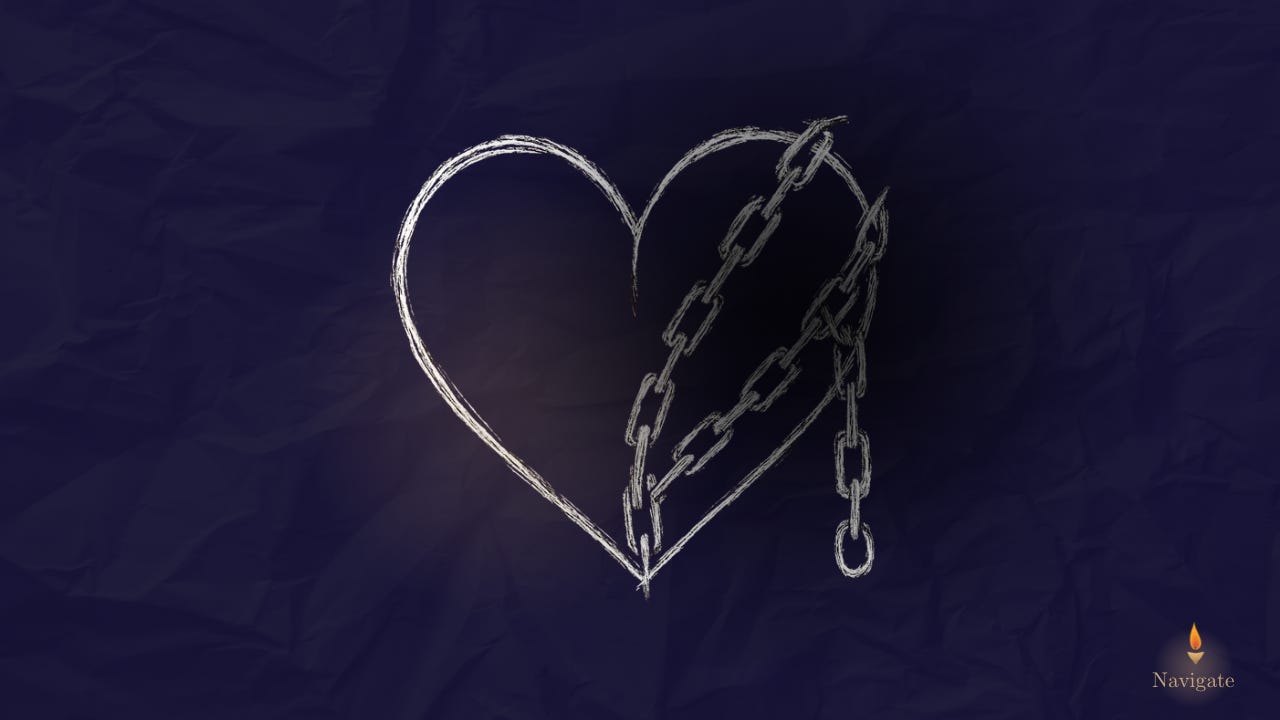
It’s easy to conflate the two, especially in families. Social norms dictate that families must love each other, and from the parent’s standpoint — how else could you justify the massive investment of time, energy, and money if it weren’t for love? But that’s where it gets slippery. Both possession and love can produce devotion, and from the outside, they can look identical. The difference is that one is love-shaped but self-centered at its core, while the other is oriented toward the other person.
So here’s one litmus test — how hard do you have to fight to be heard when you say no? Because boundaries inside a relationship aren’t a betrayal of love. They’re a condition of it.
It’s been complete silence from my parents ever since. It may be another form of punishment, maybe not. Either way, that’s okay. Because what’s important is for me to remember the lesson I’ve learned here.
One day, my baby girl is going to grow up and have a life of her own. She will have her friends, her family, her career. I’m sure I will have less and less of her over time.
That ache will be my test. I will want to keep her close, to keep her mine, and I’ll want to call it love. But I hope I can tell the difference. I hope I can want her near me and still let her go, and that I can hear not right now without making her pay for it.
The way you separated love from possession was handled in a very thoughtful way. I enjoyed reading this, thank you for sharing.